Analogies
In the commitment with the country that welcomed their ancestry, the Perosio devoted themselves from sunrise to sunset to the hard and fertile task of long days, working the earth and looking for a better future for their children... They dreamt of a better country.
The Perosio were farmers, employees, officials, merchants, industrialists, formidable professionals. They also watered not only this earth with their perspiration but also with their blood... Two facts also demonstrate their commitment to their country and they are part of our history.
Surprisingly in two periods of Argentine history pointed out as infamous, two Perosio — a man and a woman — were murdered because of their social commitment to the country that had welcomed their grandparents at different times... Both fell to the senseless interests of mean persons, the same enemy of the people. Surprisingly both were around 30 years old, in the fullness of life.
The first fact in 1930, during Hipólito Irigoyen's second presidency
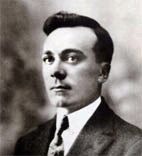
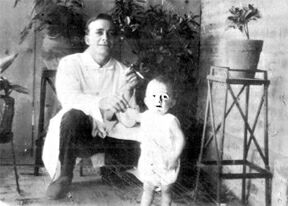
Domingo Luis Perosio, born 14 September 1897, a working man and member of a distinguished family from Rosario, postal and railway employee in the province of Santa Fe and farmer in the province of Córdoba, committed to the social causes of his people, began to participate in the Irigoyen branch of radicalism.
Called to serve as an official by his party the U.C.R., he was designated commissary of the city of Río Primero, Córdoba, at a time when the police career did not exist and mayors chose those officials — selected for his qualities as an honest man with firm convictions — with the objective of guaranteeing order during elections in a province with a history of electoral fraud by the conservatives.
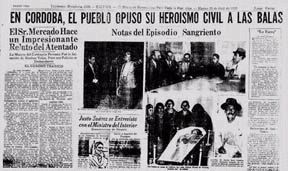
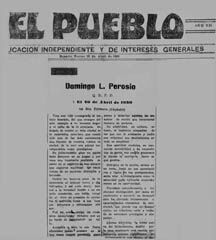
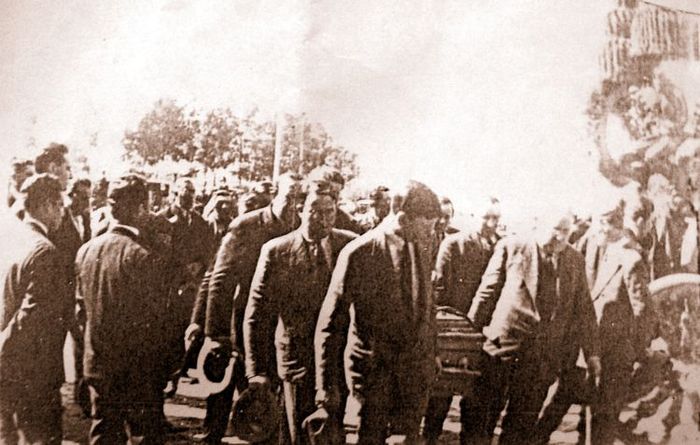
Despicably ambushed by assassins of the Demócrata party (“conservatives”), he was murdered during the confusion of a political meeting of that party in the main square of Santa Rosa de Calamuchita, on Sunday 20 April 1930.
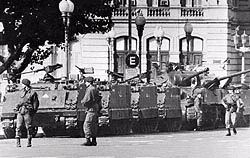
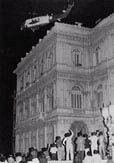
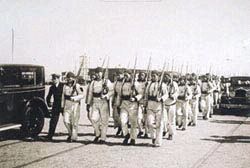
Four months later, on 6 September 1930, an authentic institutional catastrophe took place. President Hipólito Yrigoyen was overthrown by a military coup led by General José Félix Uriburu. It was the first time in seventy years of institutional life that a president had been expelled from power. Troops from the Military School and the School of Communications occupied Government House.
Yrigoyen, who had delegated command to Vice-President Martínez, resigned and was detained. Many people in the streets cheered the troops... There were shootings in front of Congress and eight people died.
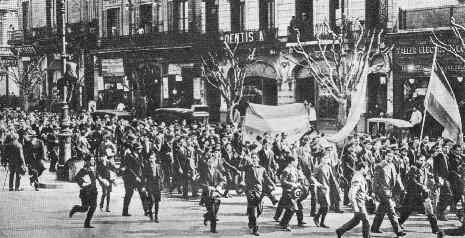
The Critica newspaper, promoter of the coup, reached a print run of 483,000 copies. Uriburu was sworn in as provisional president and the Supreme Court legalized the act.
Martial Law was decreed, with executions, raids, detention and torture of political and union leaders. Generals Mosconi and Baldrich were arrested. Yrigoyen was investigated by a judge during his confinement on Martín García island, searching for irregularities that were never found.
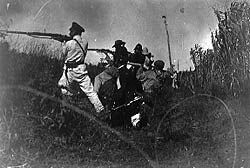
The second fact during the military dictatorship of the 1970s
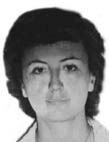
Beatriz Leonor Perosio had been born in Buenos Aires on 18 August 1948. She had grown up in the heart of the Federal Capital.
From a great Buenos Aires family, a true daughter of Palermo who played soccer with her neighborhood friends, educated in a religious school but with an indomitable spirit, always speaking her truths without bowing to authoritarianism.
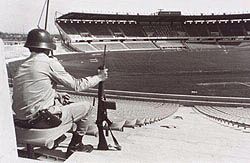
María Estela Martinez de Perón had been overthrown by the self-styled National Reorganization Process; General Jorge R Videla governed and Argentina hosted and won the Football World Cup.
Many people in the streets cheered the troops...
Beatriz Leonor Perosio held the position of President of the Association of Psychologists of Buenos Aires (APBA) since 1977 and of the Federation of Psychologists of the Argentine Republic (FePRA), when she was kidnapped on 8 August 1978 from the kindergarten she had founded with a partner to raise children capable of thinking freely and critically. She was thirty-one years old and single. She left a note to a colleague giving details of where she was supposedly being taken.
From that moment no further news of her was had. Following that event, the A.P.B.A, F.E.P.R.A and the C.G.P. spoke out on what had happened, carried out various actions before the justice system, the national and international press, human rights organizations and psychology bodies both national and foreign, all jointly with her family. All with negative results.
The country was still celebrating its Football World Championship while disbelieving the news arriving from abroad about concentration camps...
As a final analogy, both crimes went unpunished...